

How Should a Men’s Thong Fit? A Practical Fit Guide
A men’s thong should fit securely without painful pressure. The waistband should remain stable, the pouch should contain and support without unwanted compression or empty gapping, and the rear strap should stay in its intended position without pulling the front downward. During normal movement, the garment should not require recurring corrections.
A correctly fitted men’s thong should meet six basic checks:
- The waistband stays in its intended position.
- The pouch contains and supports according to your preference.
- The rear strap follows its intended path without excessive tension.
- The front and rear coverage match what you selected.
- The garment remains reasonably stable while you sit, walk, and bend.
- You do not have to keep repositioning it.
Some awareness of the rear strap can be normal, particularly if this is your first thong. Awareness is not the same as discomfort.
The main mistake is assuming that every fit problem is a waist-size problem. A men’s thong has several separate fit variables. Your waist size can be correct while the pouch volume, front coverage, rear shape, back-strap length, or fabric still does not suit you.
Compare your fit before you order
Use the live Build Your Fit tool to compare front coverage, rear coverage, pouch adjustments, and strap length. On the product page, choose Compare the differences under Pouch Style or Thong Strap Style.
Build Your Fit Check the Size Guide
Start With the Waist—but Do Not Stop There
Waist size provides the foundation for the rest of the garment, but it cannot tell you whether the pouch or rear configuration is right.
Begin by comparing your actual waist measurement with the brand’s sizing information. Do not rely entirely on the letter printed inside another pair of underwear. Sizing can vary between brands and garment styles.
Just Men’s Thongs currently offers sizes S through 7XL. You can check the men’s thong size guide before evaluating the other fit variables.
What a correctly fitted waistband does
A correctly fitted waistband should remain stable while you stand, sit, walk, and bend. It should have enough tension to maintain the garment’s position without creating painful or distracting pressure.
The waistband does not have to feel completely unnoticeable. Elastic garments can leave temporary impressions after extended wear. A mark by itself does not prove that the size is wrong. Consider the amount of pressure, how the garment behaves during movement, and whether the waistband distorts the rest of the thong.
A stable waistband should not:
- Slide repeatedly
- Roll or twist during ordinary movement
- Pull sharply against one area
- Require frequent repositioning
The position also matters. Evaluate the thong where you actually intend to wear the waistband rather than pulling it unusually high or low solely to make another part of the garment feel different.
Signs the waist may be too small
The waist may be too small if you experience pressure around most or all of the waistband rather than in one isolated area.
- The waistband digs in with uncomfortable pressure.
- Marks are pronounced and occur with discomfort.
- The waistband feels increasingly restrictive while sitting.
- The entire garment appears stretched or distorted.
- The front and rear are both being pulled under excessive tension.
These signs should be considered together. Localized pouch pressure, for example, does not automatically mean the waist is too small.
Signs the waist may be too large
The waist may be too large if the waistband cannot hold the garment in its intended position.
- The waistband slides up or down.
- The thong shifts during walking or sitting.
- The waistband twists instead of remaining level.
- The front or rear loses its intended positioning.
- You repeatedly pull the garment back into place.
A loose waistband can affect the pouch and rear strap, but it is still worth evaluating those areas separately. More than one variable can contribute to shifting.
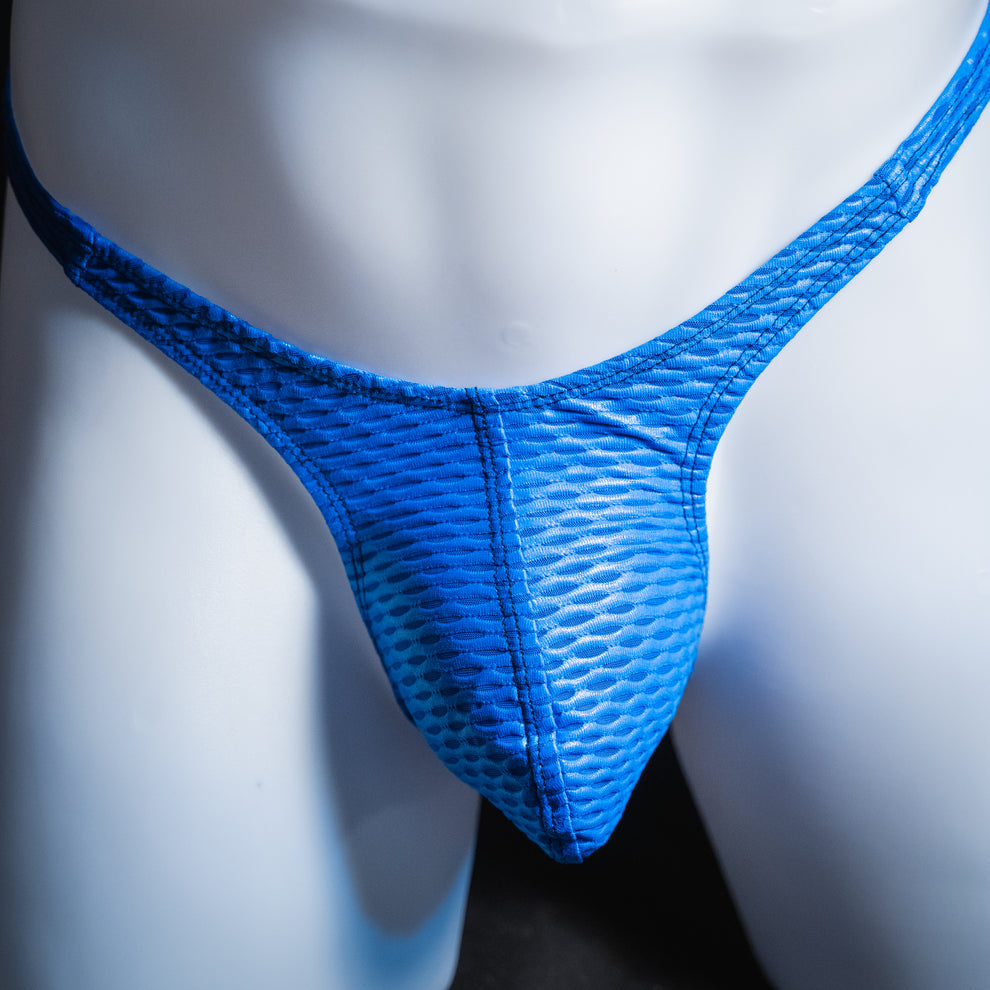
Evaluate Pouch Fit Separately
A men’s thong pouch has three distinct fit characteristics:
- Pouch coverage
- Pouch depth
- Pouch volume
These terms should not be used interchangeably. A pouch can offer narrow front coverage while still having the same depth as a wider style. It can also have the coverage profile you want while needing a volume adjustment.
Pouch coverage
Pouch coverage describes the amount and placement of fabric visible across the front. It affects how much of the front is covered and the shape of that coverage.
- Classic: Fullest front coverage
- Slim: Narrower front coverage than Classic
- Tower: Narrower front coverage than Slim
- Tear Drop: Very low front coverage with a tapered profile
Coverage is partly a visual and personal-preference decision. A narrower pouch is not automatically too small if it contains you as intended and does not create unwanted pressure. A fuller pouch is not automatically a better fit if you prefer less visible front coverage.
To compare these options with current product controls, open a product such as the Blue Yoga Mesh men’s thong and choose Compare the differences under Pouch Style.
Pouch depth
Pouch depth describes structural depth built into the pouch pattern. It is a different measurement from the width or visible coverage of the front panel.
Classic, Slim, Tower, and Tear Drop currently use the same pouch depth at Just Men’s Thongs. A Tower or Tear Drop pouch may look smaller from the front without being shallower than Classic or Slim. Selecting narrower coverage does not automatically reduce depth.
Pouch volume
Pouch volume describes the overall capacity available inside the pouch. Signs that volume may need attention include:
- Concentrated pressure inside the pouch
- Fabric being pulled more tightly than intended
- Difficulty maintaining your preferred positioning
- Empty fabric or gapping
- Shifting inside a pouch that otherwise matches your preferred coverage
At Just Men’s Thongs, pouch-size adjustments change the overall volume without changing the chosen coverage profile. A Classic pouch remains Classic after a volume adjustment. The same is true for Slim, Tower, and Tear Drop.
If the waistband feels stable but the pouch is the only area with pressure or excess space, evaluate pouch volume before changing the waist size.
Evaluate the Back Separately
The back of a thong also involves two different decisions: rear-coverage shape and back-strap length. Changing one does not automatically change the other.
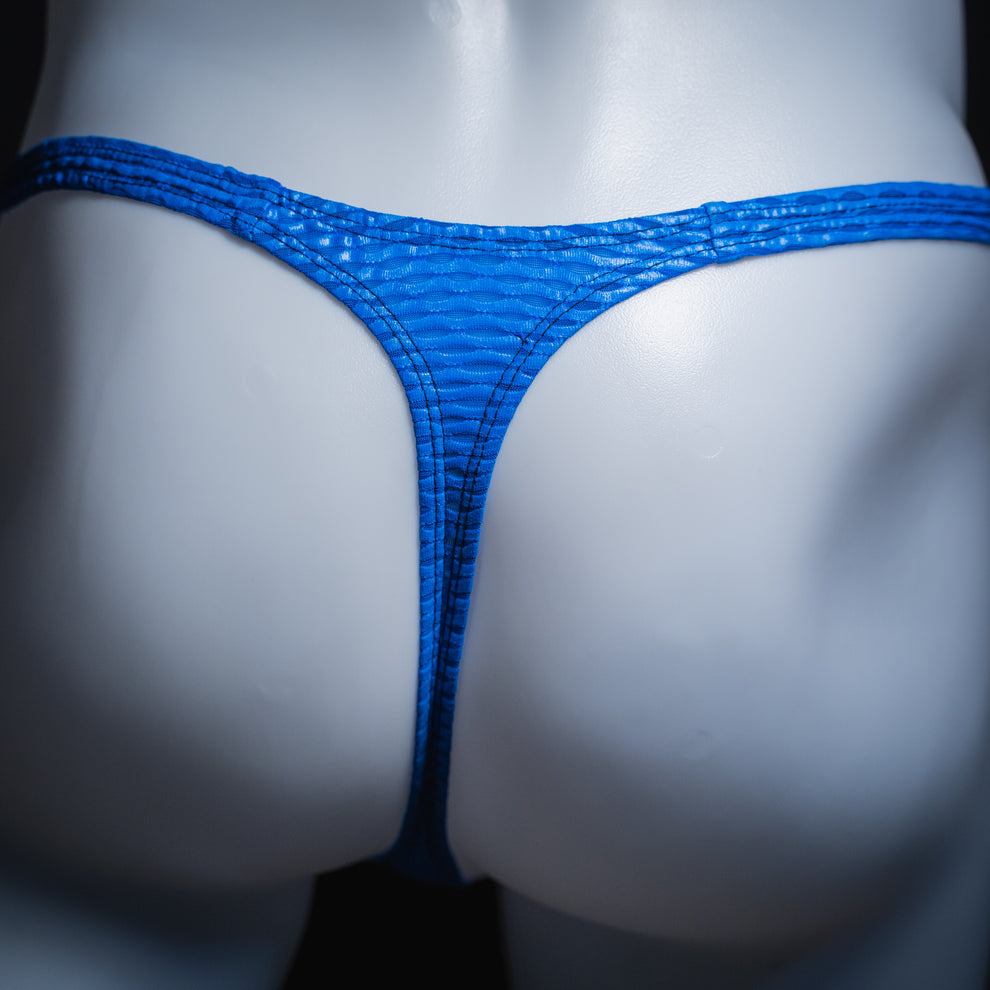
Rear-coverage shape
Rear-coverage shape determines how much fabric appears at the upper rear and the silhouette that connects the waistband to the narrower strap.
- Original: Least rear coverage
- Larger Triangle Back: Added rear coverage
- Full Thong Back: Most rear coverage while maintaining a thong silhouette
Choose the rear shape according to the amount of coverage you want. If the back feels visually too narrow or too broad, changing strap length will not turn it into a different rear shape. On the same product fit selector, choose Compare the differences under Thong Strap Style to review the current rear options.
Back-strap length
Back-strap length changes the amount of strap spanning between the pouch area and the upper rear. It affects tension and positioning but does not change the selected rear-coverage shape.
A shorter strap can create more rear tension. A longer strap can reduce that tension, but too much length may allow slack or shifting.
The goal is a strap that follows its intended position without pulling sharply, hanging loosely, changing position repeatedly, or forcing the waistband out of place.
How rear tension can affect the front
The front and back are connected, so excessive rear tension can affect the balance of the garment. A strap that is too short may contribute to the front waistband being pulled downward. It can also increase tension through the pouch and waistband.
That does not mean strap length is the only possible cause. A downward-pulling front waistband can also involve pouch volume, pouch positioning, waist size, fabric tension, or the height at which the waistband is being worn. Evaluate the entire configuration before deciding which adjustment to make.
Test the Fit During Normal Movement
A mirror check while standing is useful, but it is not enough. A thong that appears properly positioned while you are standing still may behave differently after you sit, walk, bend, or put on outer clothing.
Stand normally
Confirm that the waistband is level and stable. Check that the pouch and rear strap are in their intended positions without forcing your posture or pulling the garment into place.
Sit in a normal chair
Notice whether pressure increases sharply at the waist, pouch, or rear strap. The waistband should not be pulled significantly downward in front or pushed out of position at the rear.
Walk
The garment should remain reasonably stable without repeated shifting. Pay attention to whether the pouch maintains your preferred positioning and whether the waistband begins to slide.
Bend and move naturally
Bend forward, reach, and perform a few ordinary movements. You should not need to keep correcting the waistband, pouch, or rear strap.
Add common outer clothing
Try the thong under clothing you regularly wear. Jeans, fitted pants, loose shorts, and workwear can apply different pressure to an undergarment.
The goal is not to eliminate every sensation. The goal is stable positioning without painful pressure or recurring corrections. Fabric and elastic combinations may also feel different even when the labeled size and selected configuration are the same.
Quick Fit-Problem Matrix
| Fit symptom | First variables to check | What to look for |
|---|---|---|
| Waistband digging | Waist size, waistband position, overall garment tension | Pressure around most of the waist rather than one isolated area |
| Waistband sliding | Waist size, waistband position, fabric and elastic stability | Upward or downward movement during walking and sitting |
| Front waistband pulling downward | Back-strap length, pouch volume, pouch positioning, waist size | Rear tension or front tension changing the garment’s balance |
| Pouch pressure | Pouch volume, pouch positioning, coverage edges, waist size | Pressure concentrated in the pouch rather than around the entire waist |
| Pouch gapping | Pouch volume, positioning, fabric behavior, waist stability | Empty fabric, loss of support, or shifting inside the pouch |
| Rear strap feels too tight | Back-strap length, waist size, garment position | Excess tension rather than simple awareness of the strap |
| Rear coverage feels wrong | Rear-coverage shape | Too much or too little visible fabric at the upper rear |
| Repeated shifting | Waist stability, pouch volume, rear tension, fabric behavior | Which area moves first and causes the rest of the garment to follow |
This table identifies the first variables to investigate. It is not a substitute for evaluating the complete garment.
Know which variable you need to change? Compare the available options visually before ordering.
How Just Men’s Thongs Separates the Fit Decisions
Many underwear listings ask the customer to choose only a style and waist size. Just Men’s Thongs separates the major decisions so they can be evaluated individually:
- Select front coverage. Choose Classic, Slim, Tower, or Tear Drop according to how much front coverage you want.
- Select rear coverage. Choose Original, Larger Triangle Back, or Full Thong Back according to your preferred rear shape.
- Confirm waist size. Use your measurement and the size guide rather than changing size to solve every local fit issue.
- Review pouch-volume and strap-length needs. Use the optional adjustments when the standard configuration does not match your needs.
- Compare the configuration visually. Check the front and rear together before finalizing the selection.
- Review every option before ordering. Confirm the pouch style, waist size, thong strap style, pouch adjustment, and back-strap adjustment.
Compare front and back styles using the live product fit builder. On the product page, select Compare the differences under either Pouch Style or Thong Strap Style to open Build Your Fit.
Once you know the configuration you want, you can review men’s thongs available with the current fit options. Make the fit decisions first, then choose the fabric or print.
Frequently Asked Fit Questions
Should a men’s thong feel tight?
A men’s thong should feel secure, but it should not create painful or distracting pressure. “Tight” is too broad to diagnose the fit. Identify where the pressure occurs before changing the size.
Should the back strap be noticeable?
Some awareness of the back strap can be normal, especially for a first-time wearer. It should not create sharp pressure, persistent irritation, or repeated pulling that forces you to correct the garment. Awareness and discomfort are different signals.
Should I size up for a men’s thong?
Do not size up automatically. Change the waist size when the waistband itself is too tight or unstable. If the waistband fits but the pouch feels compressed, a pouch-volume adjustment may be more appropriate. If the rear feels too tight, evaluate back-strap length before changing the entire garment size.
Can the waistband fit while the pouch is too small?
Yes. Waist fit and pouch volume are separate variables. A stable waistband does not guarantee that the pouch has the right capacity.
How do I know whether to change waist size or pouch volume?
Look at where the problem occurs. If pressure or looseness affects most of the waistband and the entire garment’s stability, check waist size first. If the waistband remains stable and the problem is concentrated inside the pouch, evaluate pouch volume and positioning first.
For answers about ordering and current policies, you can also read the men’s thong FAQ.
Confirm Each Fit Variable Before Ordering
Start with an accurate waist measurement, but do not let the waist label make every other decision.
Choose the front and rear coverage you actually want. Then evaluate pouch volume and back-strap length as separate adjustments. Test the garment while standing, sitting, walking, and bending rather than judging it from one stationary position.
Before placing an order, compare the coverage options in Build Your Fit and review the complete configuration. A proper men’s thong fit comes from matching the separate variables, not forcing every fit problem into a larger or smaller waist size.
Ready to choose your configuration?
Set your fit first, then choose the fabric or print you want to wear.
Build Your Fit Shop Men’s Thongs
Still deciding whether a thong is right for you? Read the straightforward guide for first-time shoppers.

